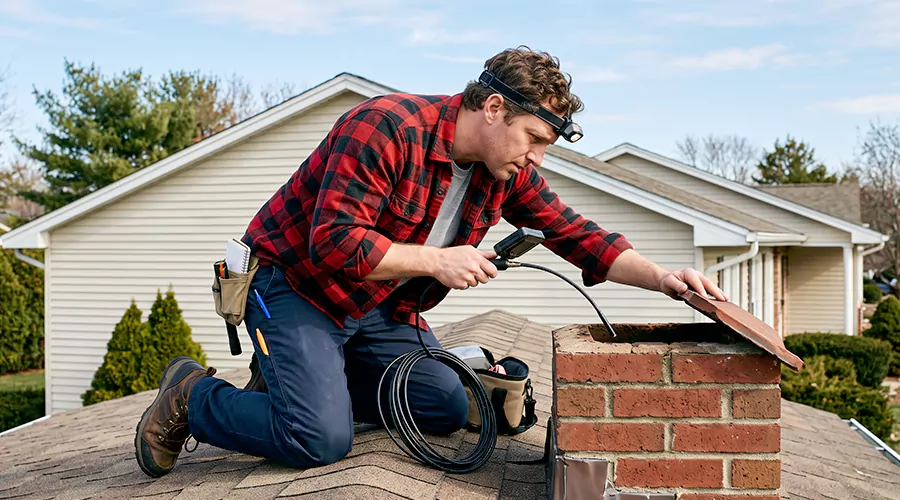
What Happens During a Chimney Inspection?
Discover how a chimney inspection uncovers hidden damage, blockages, and safety risks, and learn what each inspection level covers for your home.




Based on 500+ Reviews

Proudly American
Owned & Operated

A chimney inspection is a detailed evaluation of the fireplace, chimney structure, flue, and related components to identify damage, safety concerns, and maintenance needs. During an inspection, the chimney is checked for issues such as cracks, blockages, creosote buildup, damaged liners, water damage, and ventilation problems. A professional chimney sweep can also help remove buildup and debris identified during the inspection to keep the chimney operating safely.
A chimney may look fine from the outside while having hidden problems inside. An inspection helps identify these issues before they lead to expensive repairs or unsafe fireplace operation.
A chimney inspection helps confirm that the entire fireplace system is working properly.
The inspection focuses on:
Regular inspections are important because many chimney problems develop slowly and may not be visible without proper equipment.
A chimney inspection usually involves examining both the visible exterior and interior parts of the chimney system.
| Area Inspected | What Is Checked |
|---|---|
| Firebox | Cracks, damaged bricks, loose mortar |
| Damper | Opening, closing, and proper operation |
| Flue liner | Cracks, gaps, deterioration |
| Chimney interior | Creosote, soot, blockages |
| Exterior masonry | Brick damage, mortar condition |
| Chimney crown | Cracks and water protection |
| Chimney cap | Damage, rust, animal entry |
| Roof flashing | Leaks and water intrusion |
The inspection process depends on the chimney type, fuel source, age, and condition.
The inspection usually begins inside the home.
The inspector examines the fireplace opening and surrounding areas for visible problems.
This includes checking:
The inspector may also check whether the fireplace has been maintained properly and whether there are signs of previous problems.
The damper controls airflow between the fireplace and chimney.
During an inspection, the damper is checked to make sure it:
A damaged damper can affect fireplace performance and allow unwanted air movement when the fireplace is not being used.
The flue is one of the most important parts of the inspection.
The flue carries smoke and combustion gases out of the home. Damage inside this area may not be visible without specialized tools.
The inspection looks for:
A damaged flue liner can affect how safely heat and combustion gases are contained inside the chimney.
For wood-burning fireplaces, the inspector checks for deposits created during combustion.
Creosote can form when smoke particles condense inside the chimney. Heavy buildup can restrict airflow and increase fire concerns, while fireplace repair may be needed if the buildup contributes to damage or affects the safe operation of the fireplace.
The inspection may identify:
If buildup is excessive, chimney cleaning may be recommended.
The outside of the chimney is checked for signs of deterioration.
The inspector may examine:
Exterior damage can allow moisture into the chimney structure, which may lead to further deterioration.
The chimney crown and cap protect the chimney from weather and animal entry.
During inspection, these components are checked for:
A damaged crown or cap can allow water and debris into the chimney.
Flashing is the material that seals the area where the chimney meets the roof.
The inspector checks for:
Damaged flashing is one of the common causes of water entering around chimneys.
There are different levels of chimney inspections depending on the situation.
| Inspection Level | Purpose |
|---|---|
| Level 1 | Basic inspection for regularly maintained systems |
| Level 2 | More detailed inspection, often with camera evaluation |
| Level 3 | Investigation requiring access behind walls or structures |
A Level 1 inspection is generally used when the chimney system has no known changes and appears to be operating normally.
It includes checking accessible areas and basic components.
A Level 2 inspection is more detailed and often includes video scanning of the flue.
It may be recommended when:
A Level 3 inspection involves accessing concealed areas when serious concerns exist.
It may require removing parts of the structure to determine the extent of hidden damage.
No. Inspection and cleaning are separate services.
An inspection identifies problems, while cleaning removes soot, creosote, and debris.
A chimney may need cleaning if the inspection finds:
The inspection time depends on the chimney type and condition.
A basic inspection may take about 30 minutes to one hour.
More detailed inspections involving cameras, additional testing, or difficult access may take longer.
After completing the inspection, the homeowner should receive information about the chimney's condition.
The findings may include:
If damage is found, the next step depends on the severity of the issue.
Minor problems may require simple maintenance, while damaged liners, structural problems, or leaks may require repairs.
Before the inspection:
This allows the inspection to be completed more efficiently.
A chimney inspection involves checking the entire fireplace and chimney system, including the firebox, damper, flue liner, exterior masonry, crown, cap, and flashing.
The purpose is to identify hidden problems before they become larger safety or repair concerns. Regular inspections can reveal issues such as cracks, buildup, leaks, and deterioration that may not be visible during normal use.
Understanding what happens during a chimney inspection helps homeowners know what to expect and why each part of the chimney system matters.
A basic chimney inspection usually takes about 30 minutes to one hour, while detailed inspections may take longer.
No. Inspection checks the condition of the system, while cleaning removes soot, creosote, and debris.
A chimney inspection can identify cracks, blockages, liner damage, water leaks, creosote buildup, and structural problems.
Yes. Weather, moisture, and animals can still damage a chimney even when it is not used frequently.
A Level 2 inspection is a more detailed evaluation that often includes an internal camera examination of the flue.
Yes. A chimney fire can cause hidden damage to flue liners and other components that may not be visible from outside.
Discover how a chimney inspection uncovers hidden damage, blockages, and safety risks, and learn what each inspection level covers for your home.
